
Rambling on about Food and Its place in Life….
Food, in its most essential form, is sustenance, it is a requirement for the continuation of life. It is the daily bread that fortifies our bodies, the grains and fruits and proteins that build and repair us, the water that quenches our thirst. Yet, to speak of food solely as fuel is to strip it of its depth and beauty, to ignore the subtle and profound ways it shapes our lives, our relationships, and our very identities.
Food is an act of love. When we prepare a meal for another, we are offering more than nourishment; we are extending care, comfort, and belonging. The simple act of feeding is one of humanity’s oldest rituals. We feed the ones we love, gently spooning soup to a sick friend, baking a cake for a child’s birthday, or laying out a holiday feast to honor family and tradition. These acts are woven with intention and affection, each morsel carrying with it the silent message: “I see you, I value you, I wish you well.”
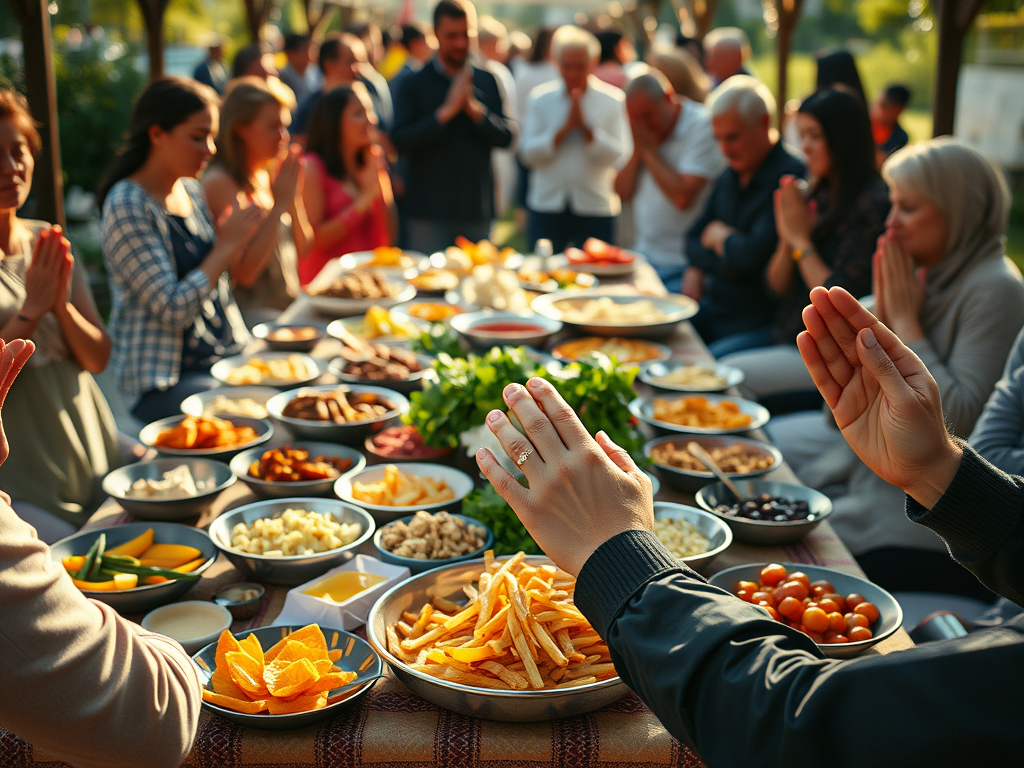
Food draws us together. It is the glue that binds community, the common ground upon which strangers become friends and friends become kin. Across cultures, to share food is to share oneself, it is to offer trust and welcome, to dissolve boundaries, and to invite others into your world.
The significance of food, however, does not end at the communal table. It is deeply personal. What we choose to eat, and what we decline, tells the story of who we are, where we have come from, what we believe, and sometimes, what we aspire to become. Food is memory. It is the aroma of a childhood stew, the taste of my grandmother’s biscuit, the taste of fruit picked beneath the summer sun. It is a taste of home, a thread that connects us to the generations before us.
Yet, food is not always a blessing. It has its shadows. For some, and for myself, it is an addiction, an attempt to fill an emptiness that cannot be satisfied with bread alone. It can become a source of pain, a battleground of will and desire, pleasure and guilt. For others, food is a source of anxiety, scarcity, or shame—the result of poverty, disordered eating, and even cultural pressures regarding body and worth. The abundance of food in some places is mirrored by deprivation in others. There are millions who are hungry, whose daily existence is defined by the gnawing ache of need and want. There are some who waste what is left uneaten, others who hoard for fear of tomorrow, and many who go without.
To contemplate a favorite food is to contemplate more than personal taste, it is to reflect on what truly satisfies. Is it the food that quenches hunger, that fulfills cravings, that delights the senses, or stirs a deep-rooted memory? Yes, and yet it is more. My favorite food is the one that arrives just when hunger is sharpest, and at times the one that carries the flavor of memory, or the one that is or was shared in laughter and togetherness.
Food is a gift. It is the earth’s bounty passed through human hands, transformed by fire and time and imagination into something that sustains and delights. It is necessary for life, but it is equally essential for the soul. To eat, to share, to celebrate, to remember: these are the rituals that give shape and meaning to our days.
In a world of abundance, there is still hunger. In a world of hunger, there is still hope—hope in the meal shared, the bread given, the table made large enough for all to gather. My favorite food, then, is more than flavor—it is the food that satisfies both body and spirit, that is savored in company, and that can be given, freely and without reserve, to those who hunger in all the ways that humans do.
May we always recognize the deeper meaning of what is before us on the table. May we feed not only ourselves but each other, with gratitude and compassion, understanding that every meal is both a necessity and a blessing—a chance to nourish, not only body but soul… to connect, and to love.
“For I was Hungry, and you gave me food” Matthew 25-35
“To the contrary, “if your enemy is hungry, feed him; if he is thirsty, give him something to drink; for by so doing, you will heap burning coals on his head.” Do not be overcome by evil, but overcome evil with good.’ Romans 12;20-21
 Dirt Road Therapy
Leave a comment